

Table of Contents
How Long Does It Take to Fix a Foundation on a House?
Depending on the home repair project, fixing a house foundation can range from a day for simple crack injection to a few weeks in the case of piers or other types of foundation stabilization. The foundation repair timeline gets extended if you also include time spent on planning and permitting. Most residential fixes fall somewhere between the two extremes based on your approach to the job and the extent of damage.
Permit review typically takes 5-15 business days, and may be longer in understaffed cities. Helical pier hardware can also have a lead time of 1-3 weeks before installation starts. It’s important to distinguish between normal settling, which generally stabilizes in the first two to three years after construction, and active foundation problems that require intervention.
Key Takeaways
- Homeowners asking how long it takes to fix a crack in a foundation will find that injection repairs are often a one-day job.
- After the damage has been identified and the method to fix it has been chosen, the next wait is not for the construction to happen, but for paperwork.
- Homeowners who are asking themselves how long does it take to fix a foundation on a house might discover that the on-site time is the shortest.
- Most homes settle somewhat within the first two to three years after construction and generally stop settling on their own.
- Homeowners who are wondering how long it takes to fix a foundation on a house may also be curious about whether they should stay home when the work is being done.
1. Rapid Crack Repair Timelines
Homeowners asking how long it takes to fix a crack in a foundation will find that injection repairs are often a one-day job. According to industry timelines, hairline crack injection typically requires a single day of work with no curing hold, making it one of the fastest repair options available.
This contrasts greatly with much larger projects such as foundation repair. While basement wall stabilizations might only take 2-5 days, it may take 5-8 weeks from start to finish for a full residential helical pier installation. This is another reason crack injection is a better solution for minor problems that aren’t deep foundation issues.
Before having repairs made, owners need to find out if the crack is active. It is normal for a house to settle over the course of about two to three years, so cracks in new homes often warrant monitoring rather than immediate intervention. If you take dated measurements and photos of the crack as it behaves during one wet and dry season, you will have a clear picture of what the crack is doing.
Faster Permitting and Engineering
After the damage has been identified and the method to fix it has been chosen, the next wait is not for the construction to happen, but for paperwork. Permit reviews usually take 5-15 business days in most cities, but can extend up to 4-6 weeks if the department doesn’t have enough staff. Our ICC- and ISO certified products come with ICC-ES documentation which can help expedite the engineering reviews, reducing delays outside our control.
A structural engineer report is necessary before any repairs begin, as they verify if the damage needs to be addressed or simply monitored. Helical piers have hardware lead times ranging from 1-3 weeks, which is why pre-staging the materials will keep your team off idle time. With our engineering network and real-time design software, we can help contractors quickly produce code compliant packages that will expedite the permitting process and keep projects moving forward.
3. Fast Helical Pier Installation
Homeowners who are asking themselves how long does it take to fix a foundation on a house might discover that the on-site time is the shortest. Once permits and materials get there, a typical helical pier job for a residential home (like 12 piers) takes only about 5-8 days on-site, but the whole project takes about 5-8 weeks.
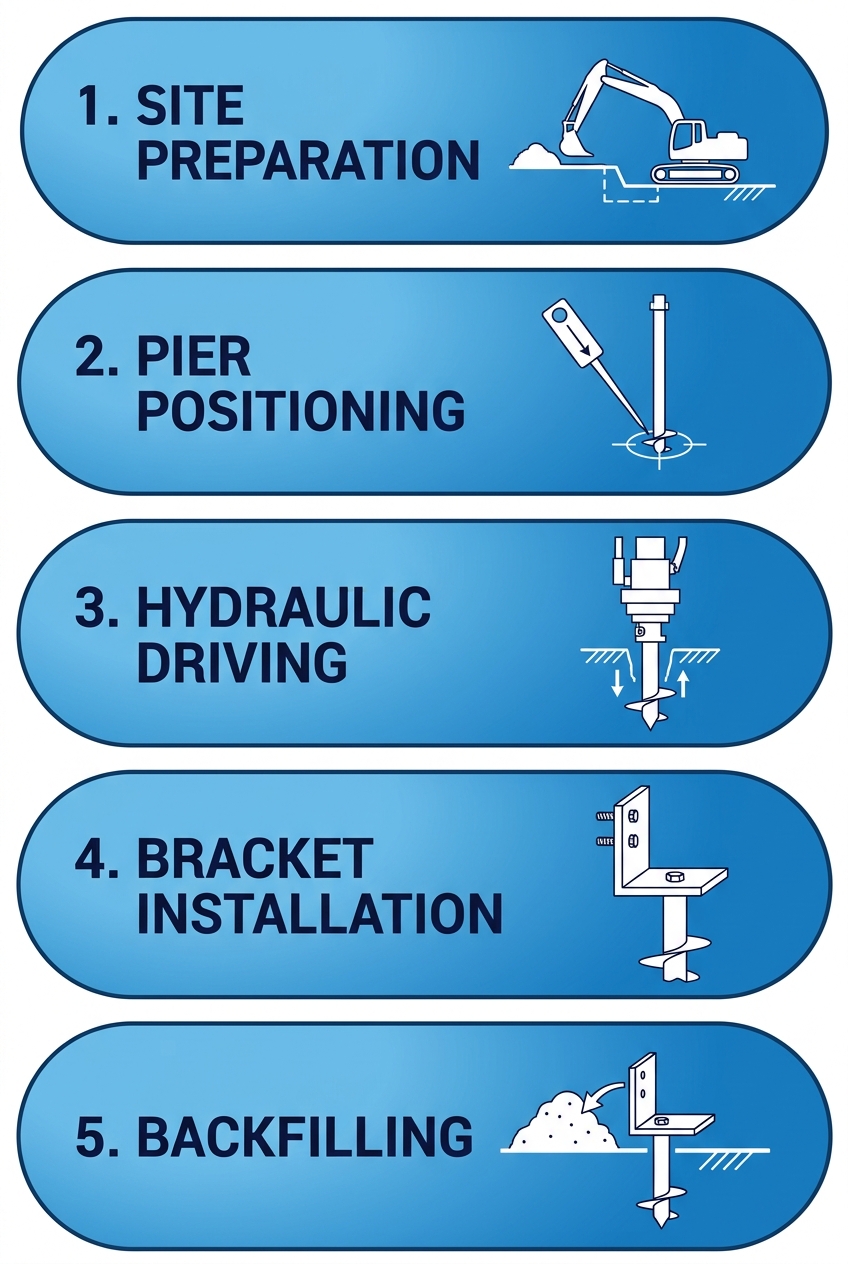
Installation consists of five phases. We first prep the site by digging trenches 3-4 feet deep for exterior work. Then we place the lead pier below the footing. After that, we use hydraulic force to drive in the pier to the required depth, watching torque in real time to make sure the soil is engaged and meets the design load per ICC-ES AC358 requirements. Once we reach our target depth, we install load transfer brackets to the foundation.
The interior installations are equally efficient, using low-profile tooling in spaces with as little as 4 feet of headroom.
4. Quick Fixes for Minor Settling
Most homes settle somewhat within the first two to three years after construction and generally stop settling on their own. Cracks that appear or doors that only stick in one room are usually minor problems and can be monitored without needing to fix anything.
One way of monitoring costs nothing and involves taking dated measurements and pictures of all affected areas then comparing these six months later in both the wet and dry seasons. If there was no change to the readings, then the settlement would be considered dormant and no further action would be needed. However, if multiple symptoms appeared in several rooms, such as stuck doors in multiple rooms, this would indicate a need for investigation by an engineer.
Prior to calling for bids on repairs, we recommend getting a structural engineer’s report, which usually runs around $450-$600. This objective opinion can help the homeowner determine if the movement is current or historic, steering them in the right direction without wasting money.
Stay Home During Repairs
Homeowners who are wondering how long it takes to fix a foundation on a house may also be curious about whether they should stay home when the work is being done. Our teams perform helical pier installation in five phases: site prep, positioning the lead pier under existing footings, driving hydraulics to target depth, installing load transfer brackets, and backfilling. Exterior jobs involve digging trenches about 3 to 4 feet deep to reach footings. Inside, we use low-profile hydraulic equipment that will fit into spaces with as little as 4 feet of headroom.
Real-time torque monitoring makes sure that all piers have engaged competent soil and are meeting the engineered load requirements. Staying on-site allows you to witness this verification in real time. Be prepared for noise and vibration, keep pets and children away from work areas, and check with our crews if they will be coming in from the inside or exterior before we start repairs. Your presence will help the crew answer questions and watch how everything progresses while the install is going on.
Torque Monitoring Speeds Verification
Because we are at home while the work is being done we are able to watch and hear what our installers are doing. One of the things that our installers verify in real time during each pier installation is a real-time torque measurement as the helical piers are hydraulically driven into the ground. The torque reading verifies that each pier is driving into good, strong soil that will support the designed load. This is confirmed by the torque readings on our hydraulic torque motors correlating to the AC358 torque-to-capacity standards. Our hydraulic torque motors provide us between 5,000 up to 15,000 plus ft-lbs of torque, which provides us precision control when installing the piers.
Since the necessary depth depends on the type of local soil – approximately five feet for soft clay up to more than thirty feet in loose sand – the time it takes for each pier can differ from job to job. Using the torque during the installation to confirm that we have repaired the pier allows us to make sure it gets done right as it’s being installed, not just at the end when we check it. That makes our customers feel better about the quality of work we do.
7. Plan Around Timeline Extensions
When answering how long does it take to fix a foundation on a house, it’s important to look at more than just the onsite installation days. For a standard residential helical pier installation of 12 piers, the onsite time is 5-8 days, but if you factor in permitting, hardware lead times and inspections, then your total timeline is more like 5-8 weeks.
Lead time for hardware adds 1-3 weeks before installation can begin, and local permit review cycle usually requires 5-15 business days, stretching up to 4-6 weeks when understaffed. Commercial underpinning projects that include IBC Chapter 17 Special Inspections take around 10-20 weeks from start to finish. Site specific factors such as load strata range from 5 feet of clay to over 30 feet of loose sand, or interior clearances which may be only 4 feet high, and these also extend schedules.
We recommend you check the timeline for permits and required inspections with your local building department as they can vary from one city to another. Planning for these extensions will keep your project going smoothly, without any surprises due to missing steps.
8. Certified Products Streamline Approvals
Using ICC- and ISO-certified products can help you avoid project delays by speeding up the permit review process and cutting down on hardware lead time. When contractors opt for certified helical piers and the necessary components, they receive standard documentation that meets building codes and reduces typical permit reviews down to 5-15 business days, as opposed to waiting weeks.
Lead times for hardware are also faster with certified suppliers. Helical pier systems typically arrive within 1-3 weeks, giving crews a set window to install them without having to wait on late deliveries. The reliability allows projects to progress from plan review to installation with less delay, helping to keep repair time lines on track.
With AC358-compliant products and manufacturer-backed engineering support, contractors can submit compliant plans and pass inspections the first time around. By managing schedule risks at the product level, teams gain confidence in their foundation repair schedule from the start.
Frequently Asked Questions
Does the foundation repair process usually require homeowners to move out of their house?
No. Helical pier installation can be completed with homeowners staying in the house. Exterior jobs require excavating trenches 3 to 4 feet deep, while interior work uses low-profile hydraulic tooling in spaces with as little as 4 feet of headroom.
How much time should I expect for the permitting and engineering phase of a foundation repair?
Permit review typically takes 5-15 business days, but may extend to 4-6 weeks in understaffed cities. Structural engineer reports usually cost $450 to $600 and are required before repairs begin.
Are there faster foundation repair methods available for minor settling issues?
Yes. Hairline crack injection repairs often take one day with no curing hold, making them the fastest option for minor issues. Monitoring over six months with dated measurements and photos helps confirm if the problem is active.
What Factors can Extend the Total Timeline of a Foundation Repair Project beyond the Initial Estimate?
Total timelines extend due to permit review cycles (5-15 business days or longer), hardware lead times (1-3 weeks), soil-dependent pile depths, interior clearance constraints, and commercial project requirements like IBC Chapter 17 special inspections.
How Long does the Actual On-site Installation for Foundation Repair Typically Take?
For a residential helical pier installation of 12 piers, on-site work typically takes 5-8 days. Basement wall stabilization may take 2-5 days, while crack injection is often completed in one day.
Plan Your Foundation Repair Schedule with Confidence
Planning out a foundation repair is much easier if we set proper expectations: Crack injection takes approximately one day, basement wall stabilization will take 2-5 days, and a residential helical pier installation will usually take 5-8 weeks to complete. Include permits that can take anywhere from 5-15 business days, as well as helical pier hardware lead times between 1-3 weeks to not get caught off guard.
Confirm the problem is genuine first by comparing dated measurements and photos taken across a six-month wet-and-dry season cycle. This distinguishes normal settling from active issues and helps prioritize solutions. We recommend obtaining a structural engineer report before soliciting contractor bids to ensure accurate scoping and cost estimates.
The time it takes to fix a foundation on a home varies based on the method used, the work that needs to be done, and local regulations, but keeping those factors in mind while you plan will help reduce uncertainty.
Plan Your Repair With Experts
You now know what shapes a foundation repair timeline, from a one-day hairline crack injection to 5-8 weeks total for residential helical pier installation. You also know that permit review of 5-15 business days and 1-3 weeks of hardware lead time often extend the schedule beyond the on-site work itself. The key is confirming whether you’re dealing with normal settling or an active problem before committing to a repair method. Once you understand your project’s scope, choosing certified products and engineering support can help keep approvals and scheduling on track. Helical Technology offers approved products and access to structural engineers for project-specific design guidance. Reviewing the engineering and design resources available can help you move from planning to a realistic schedule with confidence.