


Jason Keefer
President
Helical Pier System
Table of Contents
Understanding Helical Pier Systems
Foundation instability poses significant risks to homes and commercial buildings, often manifesting as settling floors, cracking walls, or uneven doorframes. We at Helical Technology recognize these challenges and provide helical pier system solutions designed to restore structural integrity efficiently. As a national distributor, we offer ICC and ISO certified products that address these issues through innovative engineering.
A helical pier system consists of screw-like steel shafts equipped with helical plates that screw into the ground to provide immediate load-bearing capacity. This pier-based stabilization is ideal for foundation underpinning, particularly in soils where traditional methods falter. Common problems like soil erosion or poor compaction lead to settling, but our advanced earth anchoring systems counteract these by transferring loads to deeper, stable strata. We supply a comprehensive range including piers, extensions, and accessories tailored for residential and commercial projects. Our B2B focus ensures contractors receive on-site installation training, certification programs, and support from our network of structural engineers.
Compared to concrete foundations, helical pier installation minimizes site disruption and offers superior durability. According to the American Society of Civil Engineers, steel piles like these replace concrete in electrical infrastructure, reducing environmental impact by up to 50% and enhancing longevity in challenging conditions. We emphasize engineering excellence and design support to help contractors achieve reliable results.
This overview sets the stage for exploring helical pier mechanics, benefits, and applications in subsequent sections, equipping you with the knowledge to tackle foundation repair solutions effectively. Consult our structural engineering team for project-specific guidance to ensure compliance with building codes.
Fundamentals of Helical Pier Technology
At Helical Technology, we specialize in delivering reliable helical lead section 2-7/8 inch components as part of our comprehensive helical pier system. These innovative screw pile foundations provide essential support for stabilizing structures on challenging soils. Understanding the fundamentals empowers contractors to select the right solutions for foundation repair solutions.
Anatomy Overview
The core of a helical pier consists of durable steel elements designed for longevity and performance. Key components include:
- Central shaft: A high-strength steel pipe that forms the spine, transmitting loads to deeper, stable soil layers.
- Helical plates: Welded brackets resembling large screws that advance the pier into the ground during helical pier installation, gripping soil through rotational torque.
- Extensions: Additional shaft sections coupled as needed to reach refusal depth, ensuring precise depth control.
We recommend certified components to meet project demands. Think of helical plates like oversized screws threading into wood, providing immediate grip without extensive digging. OSHA guidelines from the Construction Operations manual underscore safety in handling these elements, emphasizing competent oversight to prevent excavation hazards like soil collapse during setup.
Mechanics Explanation
Helical piers operate on proven load-transfer principles, converting rotational torque into embedment depth. As the pier is twisted into the ground using hydraulic equipment, the helical plates displace soil laterally, creating a stable helix bearing capacity. Torque directly correlates to load capacity; higher installation torque indicates greater soil resistance and thus higher bearing strength, often verified through empirical formulas without needing complex calculations.
Soil interaction is key: In cohesive clays, plates compress surrounding material for friction; in granular sands, they provide direct end-bearing. This versatility suits varied geologies, from expansive clays to loose fills. Unlike driven piles, helical systems allow immediate loading post-installation, as torque measurements confirm capacity on-site. We adhere to OSHA’s excavation safety protocols, including soil classification and protective shoring, to mitigate risks during advancement. This ensures workers avoid cave-ins by maintaining safe trench distances and using competent persons for assessments.
| Aspect | Helical Piers | Traditional Concrete |
|---|---|---|
| Installation Time | 1-2 days per site | Weeks to months with curing |
| Load Capacity | Immediate and adjustable | Delayed until full cure |
| Site Disruption | Minimal excavation | Extensive digging and pouring |
| Cost Efficiency | Lower long-term maintenance | Higher initial and repair costs |
| Environmental Impact | Reusable steel components | High concrete production emissions |
| Soil Adaptability | Versatile across types | Limited in unstable soils |
This comparison highlights how helical systems streamline operations while upholding structural integrity. For instance, in repair scenarios, they bypass lengthy curing, enabling faster load transfer and less environmental disturbance. Transitioning to benefits, helical piers support foundation underpinning by lifting and stabilizing settling structures without full replacement. They offer cost savings through reduced labor and minimal site impact, ideal for residential homes or commercial buildings.
Certifications
Our products hold ICC certification and comply with ISO standards, ensuring compliance with AC358 acceptance criteria. We provide engineering support for installations, but consult our network of structural engineers for project-specific guidance.
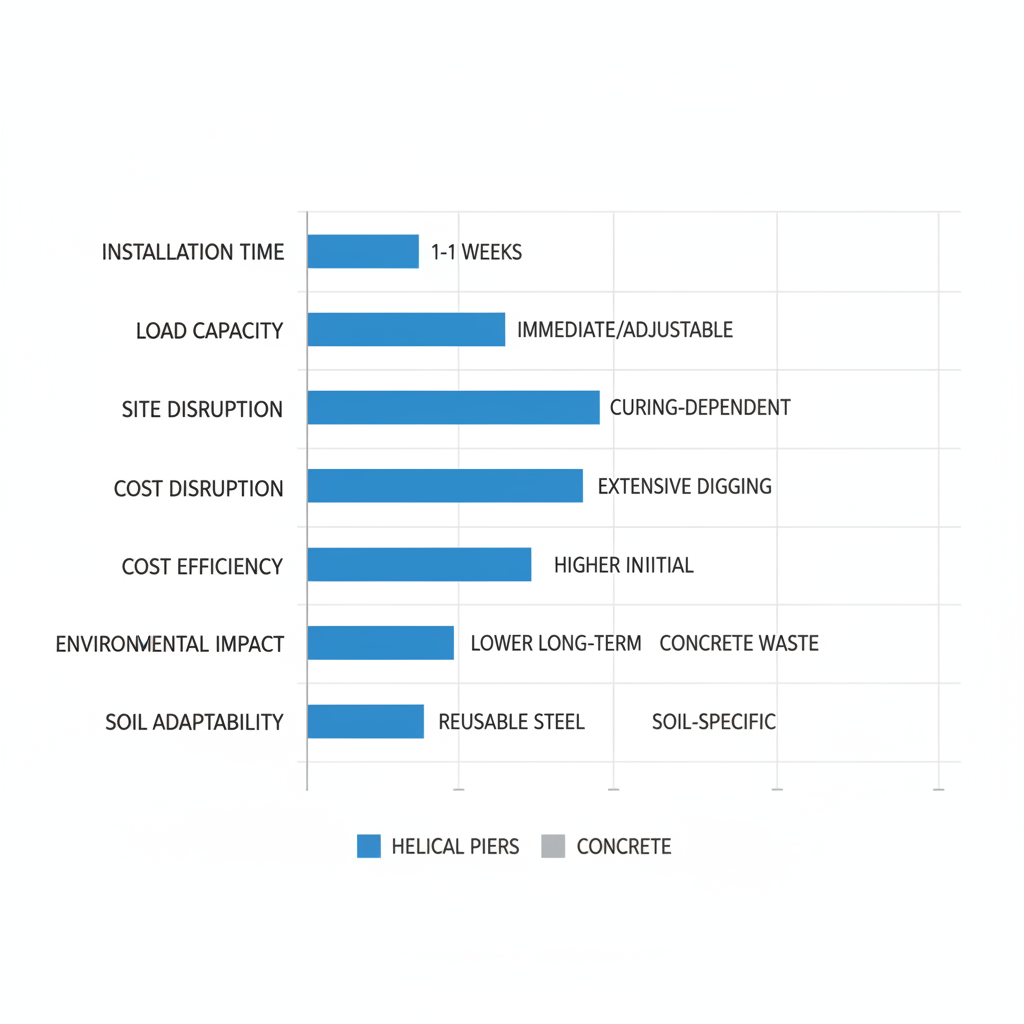
Helical piers vs. concrete foundations: key comparison chart
In-Depth Analysis of Helical Pier Mechanics
Building on the fundamentals of helical piers, this section explores the intricate engineering mechanics that underpin their reliability. We examine soil interactions, design principles, and adaptations to ensure optimal performance in foundation repair solutions. Our advanced earth anchoring systems leverage precise torque monitoring and real-time modeling to deliver engineering excellence and design support for demanding projects.
Soil Interaction and Load Distribution
Helical piers function through helical anchoring mechanics, where the geometry of the helical plates facilitated soil displacement and engagement. As the pier advances during helical pier installation, the plates rotate into the soil, creating a continuous pier-soil interface dynamics that transfers axial loads effectively. This process relies on soil shear strength, with the plates bearing against surrounding earth to resist downward forces.
| Soil Type | Helical Pier Suitability | Load Capacity (kips) | Installation Challenges |
|---|---|---|---|
| Clay | High grip via adhesion | 50-100 | Potential swelling and adhesion buildup |
| Sand | Friction-based stability | 30-80 | Shifting grains requiring higher torque |
| Rock | Requires pre-drilling | 100+ | Hard drilling and fragment removal |
Engineering Design Considerations
Engineering design for helical piers involves rigorous structural calculations for depth and capacity, tailored to project loads. Site-specific engineering support from Helical Technology integrates geotechnical data to optimize configurations, preventing failures like buckling through robust extension coupling mechanics. We recommend helical pipe extension 2-7/8 inch for seamless connections, ensuring load transfer without weak points via threaded or bolted couplers.
| Aspect | Software Calculation | Manual Calculation |
|---|---|---|
| Speed | Real-time iterations in minutes | Hours to days for complex models |
| Accuracy | Incorporates dynamic soil variables | Relies on static assumptions |
| Customization | Project-specific engineer inputs | Limited by tabular data |
| Cost Efficiency | Reduces trial-and-error expenses | Higher labor and potential revisions |
Compatibility with Diverse Soil Conditions
Helical piers demonstrate strong compatibility with diverse soils, adapting to clay’s cohesive grip for high adhesion loads up to 100 kips. In sands, friction provides reliable bearing, though capacities may drop to 30-80 kips without dense compaction. Rocky conditions pose limitations, necessitating pre-drilling to avoid excessive torque, but yield superior capacities over 100 kips once embedded.
Practical Applications and Installation of Helical Piers
At Helical Technology, we specialize in providing foundation repair solutions that ensure long-lasting stability for structures of all sizes. Our ICC and ISO certified products, including helical piers, support contractors through comprehensive training and on-site assistance.
Step-by-Step Installation Process
The helical pier installation process begins with site preparation to assess soil conditions. Advance the piers using a hydraulic torque motor to drive the helical lead sections into the ground. Monitoring torque ensures target capacity is achieved. Finally, conduct load testing to confirm stability, followed by backfill and site restoration.
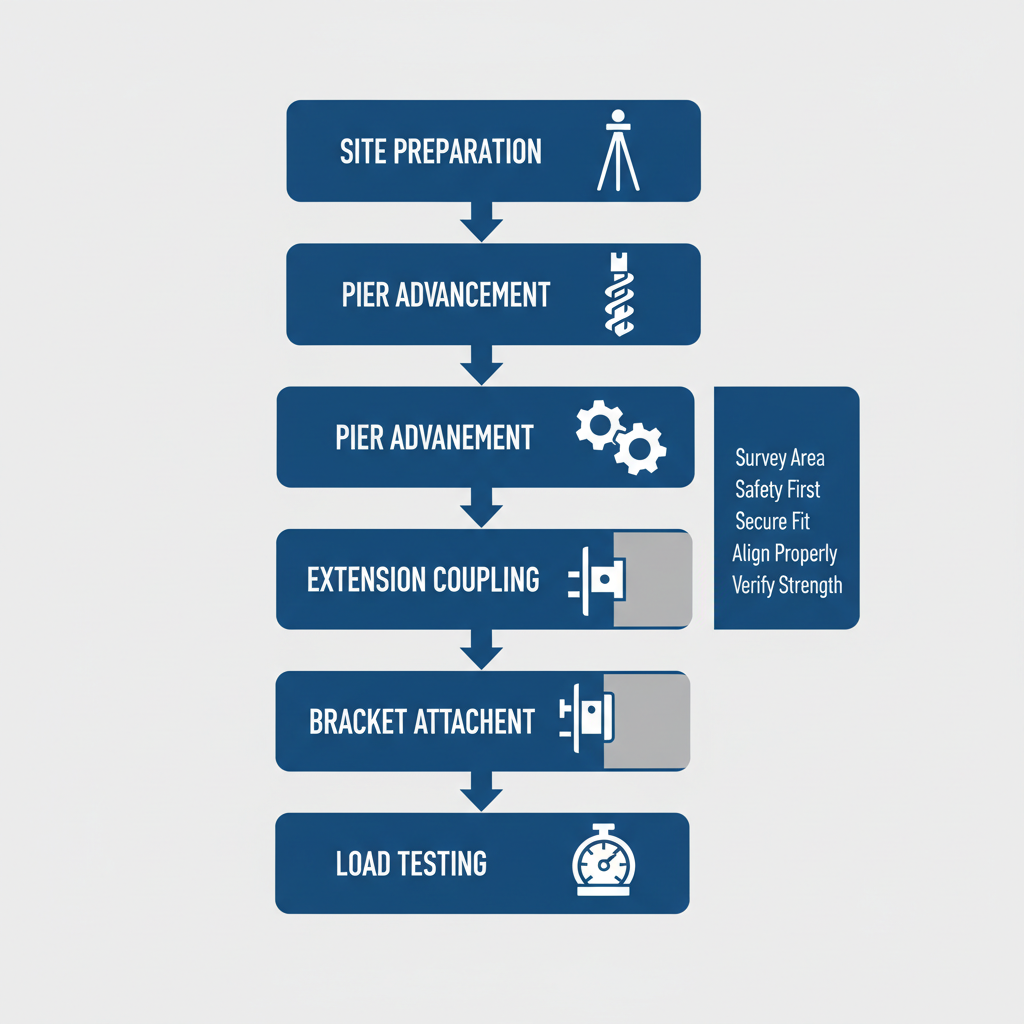
Five-step helical pier installation process for foundation repair
Equipment and On-Site Considerations
Essential machinery includes a skid-steer loader or excavator equipped with a hydraulic drive head for torque application. Selecting helical equipment offers notable efficiency gains, as the torque-based method eliminates the need for heavy pre-drilling common in push pier systems.
| Equipment | Helical Piers | Push Piers | Time Savings |
|---|---|---|---|
| Torque Motor | Hydraulic drive required | Not applicable | Up to 50% reduction |
| Drilling Rig | Minimal for helical | Full rig often needed | 30-40% faster setup |
| Crew Size | 2-4 members | 3-5 members | Smaller teams accelerate pace |
Advanced Considerations for Helical Pier Projects
As foundation repair projects grow in complexity, advanced users must navigate cost drivers, regulatory demands, and integrated solutions to ensure long-term stability.
| Factor | Residential | Commercial | Soil Impact |
|---|---|---|---|
| Material Costs | $50-100 per pier | $200-500 per day | Engineering Included |
| Total Estimate | $5k-15k | Variables | Depth and quantity |
Hybrid Systems and Integration
| Method | Load Capacity | Installation Speed | Cost per Unit |
|---|---|---|---|
| Pure Helical | High (50-100 tons) | Fast (1-2 days/site) | $1,000-4,000 |
| Hybrid (Helical + Push) | Very High (100+ tons) | Moderate (3-5 days) | $2,000-5,000 |
Frequently Asked Questions on Helical Piers
How long does helical pier installation take? Helical pier installation typically completes in 1-3 days for residential projects.
Can helical piers be installed in any soil type? No, they excel in cohesive soils but require adaptation for sandy or rocky types.
Key Takeaways on Helical Pier Solutions
Helical pier systems stand out for their versatility in foundation repair solutions, offering cost-efficient stabilization through reliable helical pipe 84 extension options.