



Jason Keefer
President
Structural Injection Epoxy
Table of Contents
Understanding Structural Injection Epoxy for Foundation Repair
Foundation issues like settling and cracking pose significant risks to residential and commercial structures, often starting as minor fissures in basement walls that escalate without intervention. For instance, unchecked cracks in a concrete foundation can lead to water intrusion and structural instability, costing contractors and property owners thousands in repairs. At Helical Technology, our structural injection epoxy solutions provide reliable foundation repair solutions to address these challenges before they worsen.
Structural injection epoxy is a high-strength, low-viscosity adhesive designed for injecting into cracks to restore structural integrity. This epoxy crack injection method bonds concrete surfaces effectively, exceeding 5000 PSI in tensile strength and resisting moisture, chemicals, and temperature fluctuations. It applies to foundation walls, slabs, and piers, enabling precise concrete crack repair and foundation crack sealing. As outlined in the ICC Building Code’s Chapter 19A on existing concrete structures, epoxy injection complies with ACI 548.15 standards for crack repair in concrete and masonry, ensuring code adherence and long-term durability.
We at Helical Technology distribute ICC and ISO certified products, including epoxy-based structural reinforcement materials, backed by our network of structural engineers for project-specific design support. Our catalog offers comprehensive technical assistance to help contractors implement these solutions efficiently.
This guide explores the fundamentals of epoxy injection, application methods, and advanced techniques to equip you with the knowledge needed for successful foundation maintenance and repair.
Fundamentals of Structural Injection Epoxy
Structural Injection Epoxy serves as a cornerstone in modern foundation repair, offering contractors a reliable method to restore integrity to compromised concrete structures. This material excels in addressing cracks that threaten structural stability, ensuring long-term performance in residential and commercial applications. We provide detailed insights into its fundamentals to help professionals make informed selections from our catalog.
In its essence, structural injection epoxy is a two-part system comprising a resin and a hardener that chemically react to form a robust polymer. Upon mixing, the components undergo polymerization, creating a solid bond that mimics the strength of original concrete. This process, known as epoxy resin bonding, allows for precise crack filling adhesives that penetrate deep into fissures. Low-viscosity formulations ensure thorough saturation, while gel types offer controlled application for surface repairs. The curing reaction generates minimal heat, reducing risks during injection in confined spaces.
The chemical properties of structural injection epoxy make it ideal for demanding environments. Key attributes include:
- High Adhesion: Forms a tenacious bond with concrete, steel, and masonry surfaces, even in slightly damp conditions, as supported by low-viscosity options that wick into fine cracks.
- Chemical Resistance: Withstands exposure to acids, alkalis, and environmental stressors, ensuring durability in foundations subjected to soil moisture or groundwater.
- Controlled Cure Time: Typically sets in 1-2 hours for low-viscosity types, allowing efficient workflow on job sites without prolonged downtime.
- Low Shrinkage: Minimal volume change during curing prevents internal stresses that could lead to future cracking.
These properties align with ICC Building Code requirements, particularly Section 1911A.2, which endorses epoxy injection for restoring load-bearing capacity in existing concrete structures per ACI 548.15 standards.
Shifting to mechanical performance, structural injection epoxy delivers exceptional strength metrics essential for load-bearing repairs. Notable features encompass:
- Tensile Strength: Exceeds 10,000 PSI, enabling it to transfer structural loads across repaired cracks effectively.
- Compressive Strength: Often surpasses 12,000 PSI post-cure, comparable to high-grade concrete for seamless integration.
- Modulus of Elasticity: Matches concrete’s rigidity at around 4 million PSI, avoiding differential movement that could compromise bonds.
- Shear Resistance: Provides up to 5,000 PSI in adhesion, crucial for shear walls and slabs under lateral forces.
According to ICC guidelines, these mechanical properties validate epoxy’s use in structural applications, ensuring compliance and safety in foundation stabilization projects.
To illustrate differences in repair materials, the following table compares structural injection epoxy with polyurethane foam for basic crack repair applications, highlighting differences in strength, flexibility, and suitability for structural loads.
| Property | Structural Injection Epoxy | Polyurethane Foam |
|---|---|---|
| Bond Strength | Up to 5000 PSI, ideal for load-bearing | Lower, around 2000 PSI, better for non-structural |
| Flexibility | Rigid, restores full structural integrity | Flexible, expands to fill voids but may not bond permanently |
| Moisture Tolerance | Works on damp surfaces with low-viscosity formulas | Reacts with water for expansion, but less effective in wet conditions |
Data sourced from ICC guidelines and manufacturer specs. Epoxy’s superior bond strength makes it preferable for scenarios demanding permanent structural restoration, whereas polyurethane suits temporary or non-load-bearing fixes. This comparison underscores selection based on project specifics, such as crack width and environmental exposure. For instance, in active foundations with ongoing settlement, epoxy’s rigidity prevents further propagation, aligning with code-mandated durability.
Epoxy crack injection involves injecting the mixed material under low pressure into cleaned cracks, allowing it to flow and cure in place. This technique addresses concrete crack repair in basement walls, slabs, and footings by sealing pathways for water ingress and restoring monolithic behavior. Benefits include enhanced waterproofing and prevention of corrosion in embedded rebar, extending the structure’s lifespan significantly.
At Helical Technology, we offer structural repair epoxy that is ICC- and ISO-certified, backed by our network of structural engineers for project-specific guidance. Consult our team or a licensed professional to ensure compliance with local building codes, as installations must adhere to ICC-ES criteria like AC358.
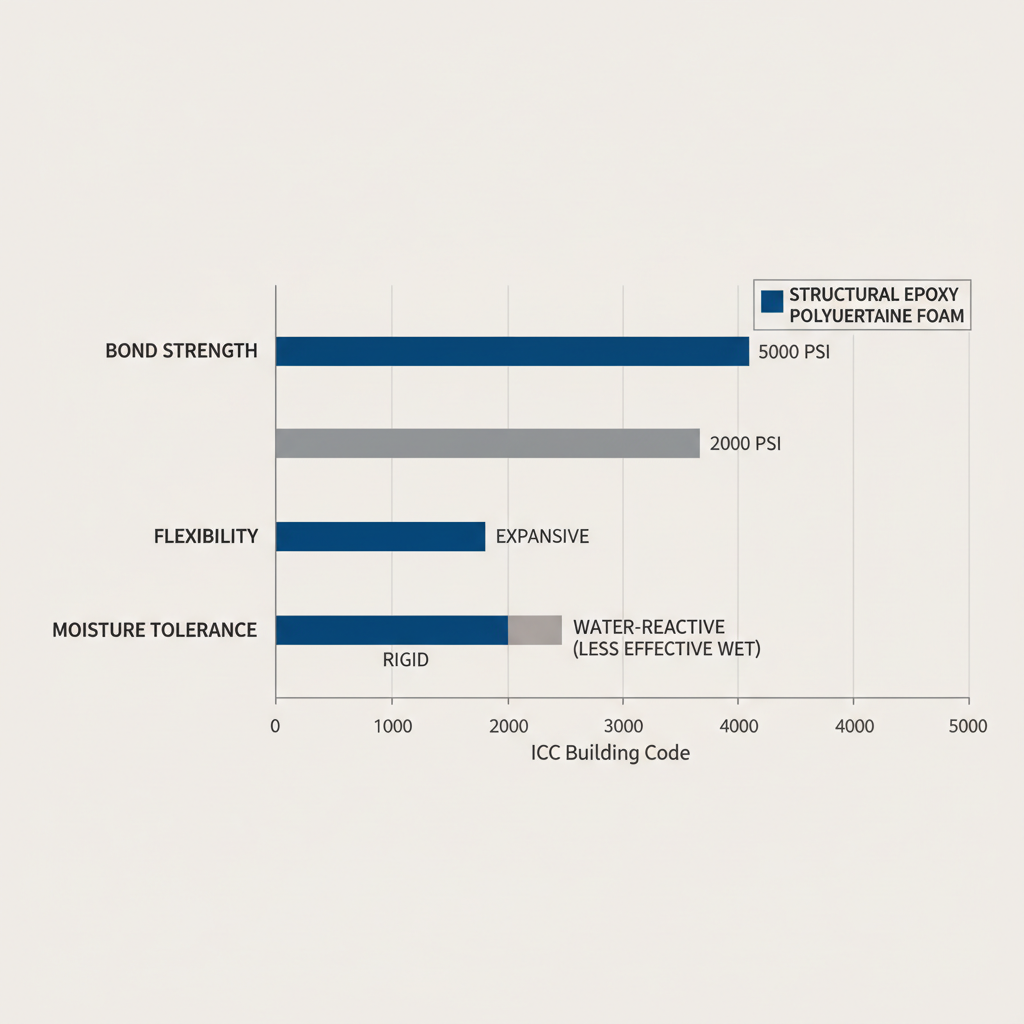
Comparison of epoxy vs polyurethane key properties for crack repair
These fundamentals lay the groundwork for advanced applications, such as handling moisture-affected cracks in deeper foundation dives, where precise material selection becomes even more critical.
Deep Dive into Epoxy Applications and Techniques
Structural injection epoxy plays a crucial role in restoring the integrity of damaged concrete foundations by effectively sealing cracks and reinstating load-bearing capacity. We recommend contractors assess project specifics to select the appropriate epoxy formulation, ensuring compliance with building codes for long-term durability. This deep dive covers essential techniques, from preparation to execution, drawing on industry standards to guide successful applications.
Crack Identification and Preparation
Assessing crack types is the foundational step in epoxy injection projects. We identify active cracks, which continue to widen due to ongoing structural movement, versus dormant ones that remain stable over time. Surface preparation involves cleaning debris, oils, and loose particles using wire brushes, compressed air, or vacuums to create a bondable substrate. For damp surfaces, hydrophilic-tolerant epoxies accommodate moisture without compromising adhesion, addressing common challenges in basement environments.
Low-viscosity epoxies excel in penetrating fine fissures, while higher viscosity options suit broader gaps. Preparation also includes routing cracks to a V-shaped groove, typically 1/4 inch wide and deep, to enhance epoxy adhesion. According to ICC Building Code standards for concrete repairs, tolerances for crack widths post-injection must not exceed 0.01 inches to ensure structural performance. We advise wearing personal protective equipment, including gloves and respirators, during preparation to mitigate exposure to dust and chemicals.
| Formulation | Viscosity | Penetration Depth | Use Case |
|---|---|---|---|
| Low Viscosity | <500 cps | Up to 12 inches | Deep fine cracks (<1/16 inch) |
| High Viscosity | >1,000 cps | Surface level (1-2 inches) | Wide surface cracks (>1/8 inch) |
Injection Process Mechanics
The injection process begins with installing ports along the crack at 6- to 8-inch intervals, sealing surrounding areas with structural sealant applications to contain the epoxy. We use manual or pneumatic pumps to deliver the material under controlled pressure, starting from the lowest port to avoid air pockets.
- Seal the crack surface with epoxy paste or capping compound to form a barrier.
- Insert ports into drilled holes and secure with adhesive.
- Mix the two-part structural injection epoxy according to manufacturer ratios.
- Inject starting at the bottom, progressing upward, monitoring flow until refusal.
- Cap ports and allow 24-48 hours for curing to achieve full compressive strength.
| Method | Pressure Level | Best for Crack Type | Pros | Cons |
|---|---|---|---|---|
| Low-Pressure | 10-40 PSI | Fine cracks (<1/8 inch) | Controlled fill, less risk of further damage | Slower for large areas |
| High-Pressure | 100-500 PSI | Wider cracks (>1/8 inch) | Faster penetration and filling | Potential for surface spalling |
| Tool | Application | Ease of Use | Cost |
|---|---|---|---|
| Manual Pump | Small-scale injections | High (portable) | Low ($50-100) |
| Pneumatic Pump | Large projects | Moderate (requires compressor) | Higher ($500+) |
Case Studies in Foundation Repair
In a residential basement wall repair in Denver, epoxy injection addressed horizontal cracks from soil settlement, restoring load paths without excavation. Using low-pressure techniques on 1/16-inch fissures, the project achieved full bonding in 36 hours, preventing water intrusion and stabilizing the structure per ICC tolerances.
Another case involved a commercial foundation in Houston with vertical cracks exceeding 1/4 inch due to seismic activity. High-viscosity epoxy crack injection, combined with ports at 4-inch spacing, filled voids effectively, yielding a 95% strength recovery. Concrete crack repair here integrated with helical piers for comprehensive support, extending the foundation’s lifespan by decades.
We documented a third example in a Midwest warehouse, where damp conditions challenged adhesion. Hydrophilic-tolerant formulas penetrated 10-inch depths, sealing cracks and averting progressive failure. Outcomes included zero recurrence over five years, validating epoxy’s versatility for structural sealant applications in varied environments.
Practical Application of Epoxy Repairs in Field Projects
At Helical Technology, we provide contractors with reliable crack stitch repair options alongside our structural injection epoxy products to ensure durable field repairs nationwide. Implementing structural injection epoxy in real-world projects demands precision and adherence to standards like those in the ICC Building Code for concrete repairs. This approach restores structural integrity in foundations and walls, minimizing downtime while meeting compliance requirements. We train installers on these techniques to deliver high-quality outcomes using our ICC-approved materials.
Step-by-Step Injection Guide
Begin with a thorough site assessment to identify crack locations, widths, and depths, ensuring the structure’s load-bearing capacity. Clean the crack surfaces using wire brushes or compressed air to remove debris, following ICC guidelines for surface preparation. Install injection ports along the crack at intervals of 6-12 inches, securing them with epoxy paste for a tight seal.
Next, mix the epoxy resin and hardener according to manufacturer ratios, typically 2:1 by volume, in a clean container. Start injection at the lowest port using a manual or pneumatic pump, applying low pressure around 20-40 psi to avoid further cracking, as per ACI 548.15 standards referenced in the California Building Code. Proceed upward, sealing each port once resin flows from the next, indicating full penetration.
| Component | Purpose | Quantity |
|---|---|---|
| Ports | Sealing crack entry points | 10-20 |
| Epoxy | Filling and bonding voids | 1-5 gallons |
| Pumps | Delivery under pressure | 1 unit |
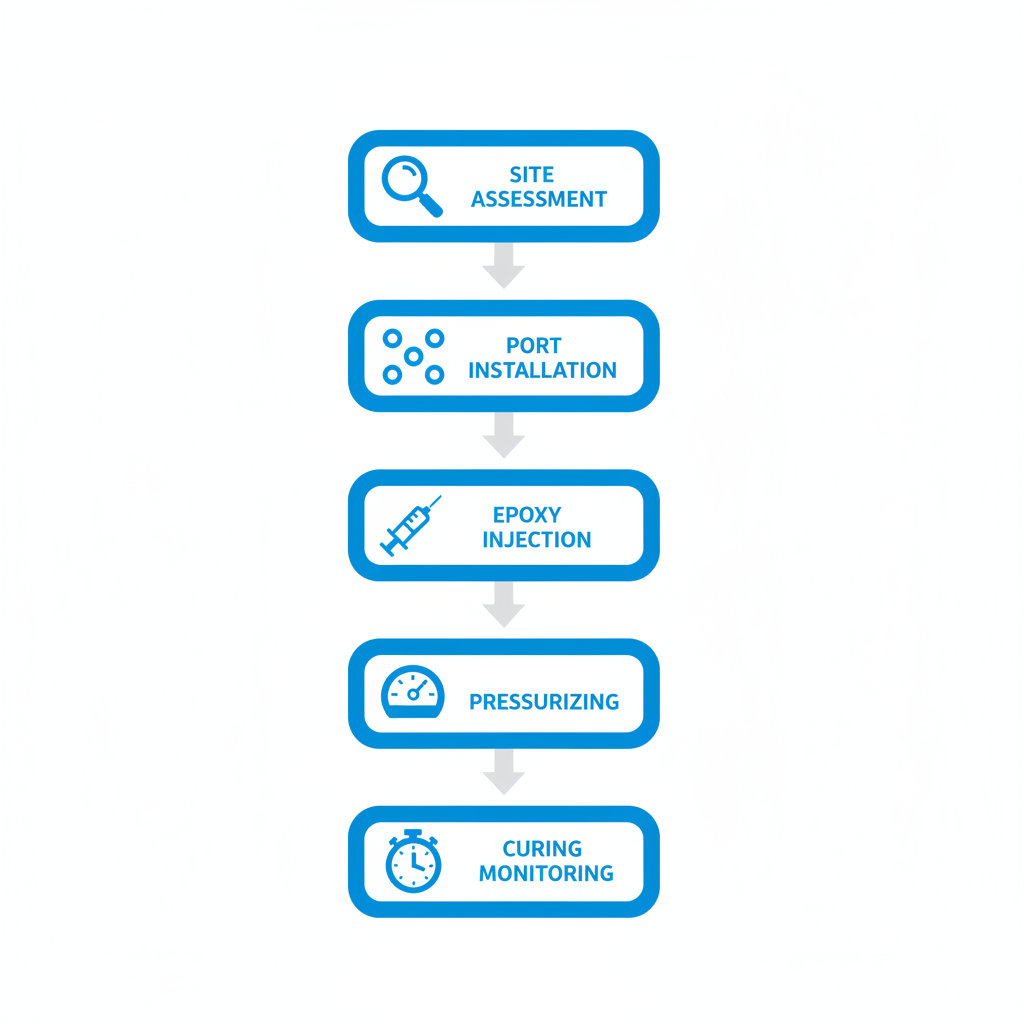
Step-by-step epoxy injection process for foundation crack repairs
Handling Common Challenges
Active leaks during injection require immediate capping with quick-set epoxy sealants to maintain pressure control in on-site crack treatment. For damp surfaces, select low-viscosity epoxies that penetrate wet substrates without compromising bond strength, adhering to ICC tolerances for moisture content below 4%.
Irregular crack paths, common in older foundations, demand flexible port placement and multiple injection passes. If paths branch unexpectedly, use gel-phase epoxies to seal side fissures first, preventing resin diversion. Concrete crack repair in these scenarios benefits from our engineering support to model flow dynamics.
Cost and Efficiency Considerations
| Aspect | DIY | Professional |
|---|---|---|
| Cost | $100-300 materials only | $500-2000 including labor and warranty |
| Quality | Variable, risk of improper mixing | High, with engineering oversight |
| Time | Days for learning curve | Hours with trained teams |
Advanced Epoxy Techniques and Structural Considerations
In challenging foundation repair scenarios, such as those in seismic-prone regions, our engineering team at Helical Technology recommends leveraging advanced applications of Structural Injection Epoxy to ensure long-term stability. This high-performance material excels in restoring structural integrity where standard methods fall short, particularly when integrated with ICC-certified helical piers or underpinning brackets.
| Formulation | Strength (PSI) | Cure Time | Special Use |
|---|---|---|---|
| Low-Viscosity | 4000+ | 1-2 hours initial | Damp surfaces, fine cracks |
| High-Strength | 7000+ | 4-6 hours | Load-bearing walls, seismic zones |
These formulations highlight the versatility of high strength epoxy adhesive in demanding conditions. Low-viscosity options penetrate tight spaces quickly, ideal for initial stabilization, while high-strength variants provide robust reinforcement for critical areas.
Frequently Asked Questions on Epoxy Repair
What are the benefits of epoxy crack injection?
Epoxy crack injection bonds cracks permanently, restoring structural integrity and preventing water infiltration, outperforming sealants in load-bearing applications.
How is concrete crack repair applied?
Clean the crack, inject low-viscosity epoxy under pressure using ports, then seal surfaces; we recommend our concrete crack lock kit for precise results.
Is epoxy suitable for all concrete cracks?
Ideal for active and dormant cracks up to 1/4-inch wide in structural elements; consult engineers for seismic zones per ICC guidelines.
How long does epoxy cure?
Most formulations set in 30 minutes and fully cure in 24 hours, enabling quick return to service without extended downtime.
Key Takeaways for Effective Crack Repair
Structural Injection Epoxy stands out as a cornerstone for durable epoxy solutions in foundation work. It excels in epoxy crack injection for concrete crack repair, penetrating deep into fissures to restore structural integrity and prevent further deterioration. Low-viscosity formulations ensure thorough coverage, while reliable curing delivers bonds that withstand environmental stresses over time.
We at Helical Technology invite you to leverage our B2B resources, including specialized products and on-site training. Contact us today for tailored advice on your next repair initiative.