

Table of Contents
Mastering Crimping Techniques for Foundation Repair Projects
In foundation repair projects, a reliable crimper is essential for creating secure electrical connections that power monitoring systems and underpin structural reinforcements. Proper crimping prevents costly failures in helical pier installations and crack repairs, ensuring long-term stability for commercial and residential structures. At Helical Technology, we provide ICC and ISO certified products to support these critical tasks.
Our guide explores the step-by-step process for using crimping pliers and terminal connector tools effectively. From selecting the right wire crimper for lighter wiring to deploying a hydraulic crimper tool—which applies powerful, uniform pressure for heavy-duty connections in foundation work—we cover techniques that enhance safety and efficiency. Drawing from OSHA electrical contractor tools guidelines, we emphasize proper maintenance to minimize ergonomic risks and ensure electrical safety on job sites.
Discover our catalog of foundation repair solutions today. With quick-order options and engineering support, we help contractors achieve secure installations and project success. Next, we’ll dive into essential safety checks before crimping.
Preparing for Safe and Effective Crimping
Before embarking on any crimping task for helical pile or underpinning applications, thorough preparation ensures safety, efficiency, and compliance with industry standards. At Helical Technology, we recommend starting with a well-organized workspace to support our ICC-certified crimpers and foundation repair solutions.
Workspace Setup
Select a dedicated area with ample lighting to avoid errors during precise operations and adequate ventilation to manage any fumes from materials. Ensure the space is stable, free of clutter, and accessible for easy movement, aligning with OSHA guidelines for ergonomic tool use. This setup reduces strain and enhances focus, particularly for projects involving advanced earth anchoring systems. Proper ventilation also protects against dust from helical installations, promoting a safer environment for contractors.
Tool and Material Checks
Inspect your crimper for signs of damage, wear, or calibration issues—uncalibrated tools can lead to faulty connections and structural risks. We advise verifying the functionality of the crimping device, especially for heavy-duty tasks where a hydraulic crimper excels in power and precision. Gather essential materials including wires, terminals, and a reliable wire crimper, along with personal protective equipment (PPE) such as gloves and safety glasses as outlined in OSHA’s electrical contractor tools standards. Review project specifications to match wire gauge and tool type—manual options suit lighter loads, while hydraulic variants handle larger-scale foundation repair. Choosing the right connector crimper depends on project scale; for extensive helical pier work, opt for robust models from our catalog to ensure reliable performance.
Compliance Verification
Confirm that all tools bear ICC approvals, essential for meeting building codes in helical and underpinning projects. Stay updated with the international standards review 2024, which emphasizes certifications for safety in emerging technologies. We provide engineering support to verify compatibility—contact us for spec sheets or quotes on crimpers tailored to your needs, ensuring installations comply with ICC-ES criteria.
Selecting the Appropriate Wire and Terminals
In foundation repair projects involving our ICC-certified helical piers, selecting the right wires and terminals ensures reliable electrical connections for monitoring systems under load-bearing stresses. We recommend starting with wire gauge based on the current load requirements, such as 14-gauge for moderate sensor circuits in helical pier installations.
- Assess the application’s electrical demands to choose the appropriate wire gauge, ensuring it handles the load without overheating.
- Match terminals to wire size, opting for insulated types for outdoor exposure in foundation environments to prevent corrosion.
- Inspect for quality markings like UL listings on both wires and terminals.
- Use a wire crimper to test compatibility, verifying secure fits with tools like a terminal crimping tool or wire connector pliers.
This selection prevents loose connections that could compromise structural integrity in our advanced earth anchoring systems, leading to costly repairs or safety risks.
For optimal results, source from certified suppliers like us at Helical Technology, where our catalog offers compliant kits with quick shipping. Always check for hydraulic crimper options in high-stress applications, and consult OSHA standards for safe wire handling to maintain compliance in your projects.
Preparing the Wire Ends
Once we have selected the appropriate wire and terminals for your structural repair project, the next critical step involves preparing the wire ends meticulously. This preparation ensures compatibility with our high-quality crimpers and supports reliable connections in helical pile installations and underpinning applications. Using a precision wire preparation tool, begin by stripping the insulation from the wire ends. Carefully insert the wire into the stripper’s appropriate gauge slot and rotate gently to remove about 1/4 inch of insulation without nicking the conductors, which could compromise conductivity. After stripping, inspect and clean any oxidation from the exposed strands using a soft wire brush or contact cleaner. Trim the strands to the exact length specified by the terminal, then pre-twist them tightly to form a solid bundle, facilitating smooth insertion into the terminal.
Proper wire preparation is essential for achieving strong, durable bonds that withstand the demands of foundation repair solutions. Clean, undamaged conductors maximize the crimping force from our wire crimpers, reducing the risk of loose connections that could lead to failures in advanced earth anchoring systems. By emphasizing this foundational step, we help contractors meet ICC and ISO certified standards for performance and reliability.
To optimize results, avoid over-stripping, which exposes too much wire and invites corrosion; instead, measure twice before cutting. Always wear safety gloves and eye protection during preparation to prevent injuries from sharp tools. For complementary applications, consider bundling our wire crimpers with the ADT30S Manual Dispensing Tool for epoxy injections in crack repairs, creating a comprehensive toolkit for your projects.
Inserting the Terminal into the Crimper
Before proceeding with the crimping process in foundation crack repairs, we ensure that all components are properly prepared for secure connections. Using our ICC-approved products, such as helical anchors and structural repair epoxy, technicians often need to crimp terminals to electrical leads or tension cables for reliable performance during installations. Begin by selecting the appropriate wire crimper matched to your terminal size, ensuring compatibility for precise results.
To insert the terminal correctly, align the terminal barrel fully with the stripped wire end, pushing it until the wire insulation butts against the barrel’s stop. Place the assembly into the terminal crimping jaws of the crimper, selecting the correct die size based on the terminal’s specifications—typically marked on the tool or referenced in our product catalog. For heavy-duty applications involving push piers or plate anchors, we recommend using a hydraulic crimper to handle higher compression forces without slippage. If working on unstable surfaces, secure the crimper in a vise to maintain stability during insertion.
This precise fit is crucial because improper positioning can lead to loose connections that compromise structural integrity, potentially causing failures in load-bearing repairs under tension loads up to 50 tons, as seen in commercial foundation projects.
As a tip, always double-check alignment by visually inspecting that the wire is fully seated before closing the jaws, and test a sample crimp on scrap material to verify consistent compression. Consider ordering matched terminals and crimpers from our catalog to streamline your workflow and ensure compliance with building codes.
Performing the Crimp
Once the wire is securely positioned in our certified crack stitch repair tool, execute the crimp with precision to ensure reliable structural reinforcement in foundation projects. We recommend using a hydraulic crimper for larger-scale applications, as it delivers consistent force for efficient results.
To perform the crimp, align the wire ends evenly within the jaws of the compression tool. Apply controlled pressure manually with a wire crimper for smaller tasks or activate the hydraulic system for automated execution, squeezing until the indicator shows full compression. Hold the pressure for 5-10 seconds to allow the connection to set firmly, then carefully release the jaws to avoid damaging the crimp. Finally, visually inspect the connection for uniformity and strength before proceeding.
This step creates a secure hold that prevents slippage under load, essential for our advanced earth anchoring systems and long-lasting foundation repair solutions.
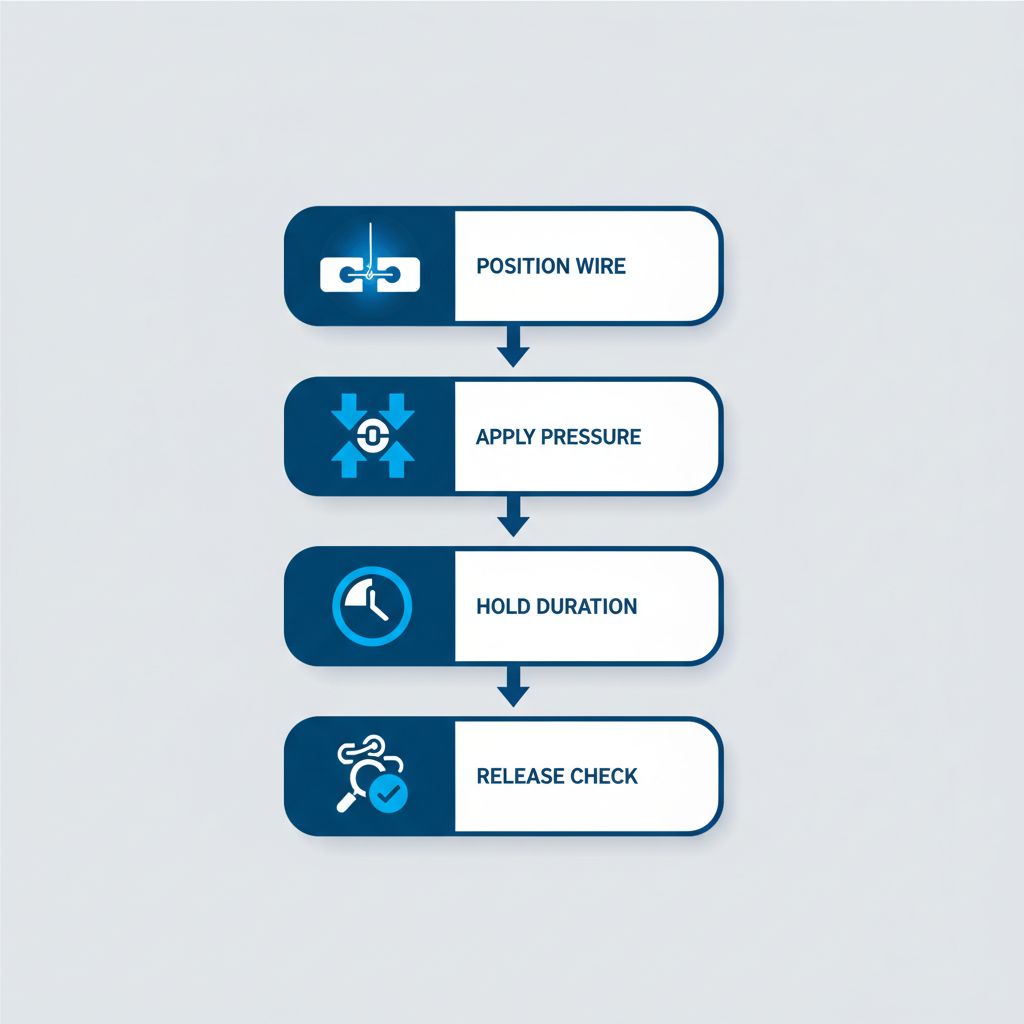
Monitor pressure closely to prevent over-crimping, which can weaken the wire and compromise the repair. Opt for our ICC and ISO Certified products to maintain compliance and safety in every installation.
Inspecting the Crimp Quality
After completing the crimping process with our concrete crack lock kit, we must verify the integrity of each connection to ensure it meets rigorous foundation repair standards. As experts in advanced earth anchoring systems, we recommend a systematic inspection to confirm that installations comply with ICC and ISO certifications, safeguarding structural longevity and warranty adherence.
Begin with a visual check for any deformation or gaps around the crimp, using a crimp inspector tool to spot irregularities. Next, perform a tug test by applying gradual force up to 2900 lbs, simulating real-world stresses as seen in our kit’s laminate tensile strength. Measure the crimp dimensions with calipers to confirm they fall within specified tolerances, typically 0.1 mm variance. If any fail, redo the crimp immediately using the hydraulic crimper for heavy-duty applications.
This verification step ensures connections withstand environmental loads, preventing premature failures and extending the service life of repairs by up to 50 years. Proper inspection upholds our commitment to engineering excellence.
For precision, always use digital gauges during checks to document results, facilitating compliance reporting and quality assurance in concrete crack repairs.
Applying Crimps in Hydraulic Scenarios
In high-force foundation repair projects, we often rely on advanced tools like the hydraulic crimper to ensure secure connections for structural components. A hydraulic crimper tool delivers powerful compression through fluid pressure, ideal for crimping large terminals in anchoring systems such as our helical piers and plate anchors. This adaptation from basic hand crimping allows contractors to handle demanding terminations efficiently, building toward final assembly in earth anchoring installations.
To apply crimps effectively, begin by setting the hydraulic pressure to the manufacturer’s specifications, typically between 7000 and 10000 PSI for heavy-duty applications. Position the large terminals firmly around the wire or hose, ensuring alignment to avoid slippage. Activate the pump to initiate compression, then monitor the flow rate closely to achieve uniform deformation without over-crimping. These steps secure reliable bonds in vapor barrier setups, such as those using our Term Bar for perimeter wall terminations.
We recommend hydraulic crimpers for heavy loads because they provide consistent force that manual crimpers cannot match, reducing failure risks in load-bearing foundation tasks. This ensures long-term stability in residential and commercial structures.
For optimal performance, calibrate your power crimping unit regularly and always wear protective gear to emphasize safety during operation. Routine checks prevent hydraulic leaks and maintain precision in every crimp.
Final Assembly and Testing
After crimping the wires using our recommended wire crimper, we proceed to the final assembly stage to integrate these components into complete foundation monitoring systems. Connect the crimped wires to monitoring devices, ensuring secure attachments that support our advanced earth anchoring systems. Insulate all connections with appropriate materials, then apply Helical Technology’s Woven-Seal vapor barrier for waterproofing, protecting against moisture in crawl spaces and enhancing long-term durability. This step completes the physical assembly, preparing the system for operational verification.
Conducting a continuity test is essential to confirm electrical integrity before deployment. Using a multimeter on the crimped connections from the crimper, we verify that signals transmit without interruption, safeguarding system reliability in foundation repair solutions. This testing phase ensures our ICC and ISO Certified products perform as expected, preventing failures that could compromise structural integrity.
We recommend logging all test results meticulously, including voltage readings and any anomalies observed during the assembly crimper verification. Document compliance details to align with building codes, facilitating easy reference for future maintenance. By purchasing our full encapsulation kits, which include Woven-Seal and related fasteners, contractors can streamline this process and achieve superior project outcomes. This wraps up the installation steps, setting the stage for addressing any common troubleshooting issues that may arise.
Resolving Common Crimping Issues
In foundation repair projects, crimping plays a crucial role in securing connections for anchors, brackets, and wiring within systems like helical piers and plate anchors. However, issues such as loose connections or damaged wires can compromise structural integrity. At Helical Technology, we assist with diagnosing and resolving these common crimping mistakes to ensure reliable installations. Our advanced earth anchoring systems integrate seamlessly with proper crimping techniques, particularly in crack repair scenarios where precision is essential for reinforced solutions.
To address “What are common crimping mistakes?”, we outline key diagnostics in a step-by-step troubleshooting pattern:
- Over-crimping: This occurs when excessive force deforms terminals, leading to brittle connections that may fail under load. Symptoms include flattened or cracked crimp points. To fix, strip the wire anew and use a calibrated crimper to apply even pressure. If using a hydraulic crimper for high-volume repairs, check the pressure gauge against manufacturer specs to avoid repetition.
- Under-crimping: Poor contact results from insufficient compression, causing intermittent conductivity or slippage in foundation brackets. Look for loose fits or high resistance. Redo by selecting the correct die size on your wire crimper and applying firm, steady force without exceeding limits.
- Wire slippage: Wires may shift during crimping due to lubrication or angle errors, weakening holds in underpinning applications. Inspect for gaps at the crimp site. Adjust by cleaning the wire surface and aligning it fully before re-crimping; our engineering team recommends this for crack stitch integrations.
- Tool misalignment: Dies not seating properly lead to uneven crimps, common in field repairs with plate anchors. Signs are asymmetrical deformations. Calibrate your tool and practice on scrap wire; for persistent cases, consider a dedicated crimp fault troubleshooter accessory.
Prevention starts with routine tool maintenance and operator training, which we provide through our certification programs. Always verify wire gauge compatibility and use ICC and ISO Certified products to minimize errors. For complex foundation repair solutions, follow our guidelines to achieve consistent results.
If issues persist, contact our technical support team led by experienced structural engineers. We offer Engineering Excellence and Design Support, including guidance on replacement tools available through our catalog. This ensures your projects meet building codes and deliver long-term stability.
Securing Your Foundation Projects with Expert Crimping
In conclusion, selecting the right crimper and adhering to precise steps while addressing common troubleshooting issues ensures durable foundation repairs. Our advanced earth anchoring systems and foundation repair solutions, including effective crimping techniques, prevent structural failures and extend project longevity. By following these best practices, contractors avoid costly mistakes and achieve reliable outcomes in crack repair applications, as demonstrated in our successful case studies using products like the Crack Stitch and CONCRETE CRACK LOCK KIT.
Helical Technology’s ICC and ISO certified products deliver unmatched performance. The wire crimper provides precise connections for lighter applications, while the hydraulic crimper handles heavy-duty tasks with superior force and efficiency. These professional crimping solutions, backed by our network of structural engineers, guarantee engineering excellence and design support for seamless integration into residential and commercial projects.
We invite you to contact our team today for orders, certifications, or custom engineering advice. Request a quote for pricing tiers through our portal or reach us at 303-945-9080 or [email protected]. With our training and technical support, secure your projects’ success and long-term integrity—consult our structural engineers for site-specific guidance to comply with building codes.
Resources
- Get Patented Crack Stitch for Permanent Structural Repairs
- Secure Slabs with High-Strength Concrete Crack Lock Kit
- Apply Fast-Curing Epoxy for Secure Injection Port Fixes
- Explore Comprehensive Crack Repair Tools and Epoxy Solutions
- Install Flexible Stego Term Bar for Vapor Barrier Security
- Deploy Reinforced Woven-Seal Vapor Barrier for Foundation Protection
- Utilize Durable Manual Dispensing Tool for Epoxy Applications
- Discover Ergonomic Tools to Minimize Electrical Contractor Strain
- Review 2024 Global Standards for Safety and Sustainability Advances