

Table of Contents
- Recognizing Foundation Settlement in New Construction
- Early Warning Signs of Foundation Settlement in New Construction
- Distinguishing Normal Settling from Problematic Foundation Movement
- Do Sticking Doors and Windows Indicate Foundation Settlement?
- Understanding Cracks in Drywall and Masonry in New Homes
- When to Call a Professional for a Foundation Inspection
Recognizing Foundation Settlement in New Construction
Understanding the signs of foundation settlement in new construction is essential for maintaining a safe and valuable property. New homes naturally settle slightly, but more significant movement can indicate structural problems that require attention. According to Helical Technology’s FAQ on pile foundations, specific symptoms like drywall cracks that measure more than 1/8 inch in width vertically or 1/32 inch horizontally are definitive warning signs. The National Foundation Repair Association also identifies other interior clues that demand a closer look:
- Sticking doors or windows that no longer close smoothly as their frames distort.
- Uneven or noticeably sloping floors that point to differential settlement beneath the slab.
- Gaps forming around window frames, door frames, or where interior walls meet the ceiling.
These are not just cosmetic issues; they are early warning signs that the soil supporting your home may be shifting. If these indicators are visible, we recommend consulting a structural engineer to assess the situation and reviewing deck financing options for planning any necessary structural work.
Early Warning Signs of Foundation Settlement in New Construction
Knowing why settlement occurs, the next step is recognizing the early warning signs. Spotting the signs of foundation settlement in new construction early can save thousands in repairs. Homes built within the last five years may show visible interior and exterior clues of settling soil.
Interior Signs
Three interior signs of foundation settlement in new construction include:
- Diagonal drywall cracks above door frames, signaling frame shifting.
- Windows that stick or fail to latch, indicating misaligned frames.
- Sloping or bouncy floors from uneven support.
These issues can worsen quickly, so document them with dated photos and precise crack-width measurements. Keep a detailed log and track changes over time for contractor review periodically.
Exterior Signs
Outside, look for:
- Brick veneer or siding separating from windows and doors, leaving gaps.
- Horizontal or stair-step cracks in the foundation wall, especially near corners.
Unlike cosmetic hairline cracks, these patterns often indicate structural movement requiring professional evaluation.
These early indicators of settlement in newly built homes typically appear within the first 12 to 18 months as a direct result of initial soil compression. We recommend measuring crack width in millimeters—cracks under 1/8 inch vertical or 1/32 inch horizontal may be cosmetic, but wider or expanding cracks demand a structural engineer’s attention. If these signs appear within the first year or two, they may point to foundation pile failure causes that require immediate professional evaluation.
Identifying these signs early is the first step toward a reliable repair. Our engineering team can assess the situation and recommend advanced earth anchoring systems tailored to your project. Contact Helical Technology’s engineering support or a local structural engineer for a professional assessment.
Consult a structural engineer or the manufacturer’s engineering team for project-specific design and installation guidance.
Products are certified to ICC/ISO where indicated — installations must comply with applicable building codes and ICC-ES acceptance criteria (AC358).
Distinguishing Normal Settling from Problematic Foundation Movement
Understanding the signs of foundation settlement in new construction is critical for homeowners and contractors alike. While all new construction experiences some degree of settlement, not all movement indicates structural failure. We can help you differentiate between normal, tolerable settling and the problematic foundation movement that demands immediate attention.
Normal Settling
Most buildings settle slightly within the first few years after construction, as the soil beneath the foundation compresses under the new load. This uniform, vertical movement is generally acceptable and rarely impacts the structure’s integrity. In new construction, it is common to notice hairline cracks, often along drywall seams or concrete shrinkage. These cracks typically measure less than 1/16 inch and do not signify structural problems. Typical indicators of normal settling include:
- Hairline cracks in drywall or concrete that remain less than 1/16 inch wide.
- Minimal, uniform settlement that does not cause functional issues.
- No visible distortion in door or window frames.
These signs of settling are part of the natural curing and compaction process. As long as cracks remain stable and no new symptoms appear, owners can usually monitor the situation without alarm. Documenting crack locations and widths with a simple photographic log can provide peace of mind, but immediate repairs are rarely required.
Problematic Foundation Movement
Differential settlement, where one part of the foundation moves more than another, is the real concern. According to Helical Technology’s FAQ on early signs of settlement in failing pile foundations, telltale indicators include diagonal cracks near windows and doors, uneven floors, doors that stick, and gaps around window frames. These symptoms suggest that the foundation is shifting unevenly, and often escalate without intervention.
- Cracks that exceed 1/8 inch in width, especially stair-step cracking in brick veneer or concrete block.
- Vertical displacement greater than 1/2 inch between adjacent sections of the foundation.
- Bulging or leaning walls, sloping floors, or trim that separates from the wall.
If you observe any of these issues, we recommend actively monitoring crack width over time using a crack monitor or simple measurements. New or widening cracks, along with persistent sticking doors or increasing floor slope, signal ongoing movement that requires professional evaluation. A structural engineer can assess whether underpinning or repair systems are necessary.
Consult a structural engineer or our engineering team at Helical Technology for project-specific design and installation guidance. With our ICC- and ISO-certified product line, backed by engineering excellence and design support, we provide foundation repair solutions tailored to your project.
Do Sticking Doors and Windows Indicate Foundation Settlement?
You might also be wondering about more common household signs, like doors and windows that suddenly stick. When looking for signs of foundation settlement in new construction, sticking doors and windows are a common concern, but they are not conclusive. Seasonal humidity changes, wood expansion, or improper installation can cause doors and windows to stick without any foundation movement. For a definitive diagnosis, consult a structural engineer. Helical Technology can connect you with engineers in our network.
Sticking may also result from non-structural causes. High humidity can swell wooden frames and sashes, creating temporary binding that resolves when conditions dry out. New homes often experience minor settling in the first year, causing doors to shift slightly without indicating foundation distress. Poor installation—misaligned jambs or insufficient shimming—can produce persistent sticking that looks like settlement. Because these issues are seasonal or one-time, they rarely signal progressive foundation damage.
However, sticking that remains consistent throughout the year and is accompanied by other foundation settlement warning signs warrants investigation. Settlement-related sticking persists regardless of weather. Where a door sticks can provide clues: sticking at the top often means the header has dropped due to differential settlement; sticking at the bottom may indicate floor movement. Additional indicators include interior wall cracks, especially near corners and above doors; sloping floors; gaps between cabinets and ceilings; and separation at trim joints. When looking for signs of foundation settlement in new construction, it’s the combination of these symptoms, rather than a single sticking door, that paints a clearer picture. According to the National Foundation Repair Association, sticking doors and windows are recognized symptoms, but they must be evaluated alongside these other signs to confirm structural issues.
If you notice persistent sticking combined with any of these additional indicators, it’s important to seek professional evaluation before the condition worsens. While some settling is normal in new construction, worsening symptoms beyond the first year often point to ongoing movement that requires intervention. Helical Technology’s network of structural engineers can assess your home and determine whether foundation repair solutions are necessary. We provide engineering excellence and design support to help identify the root cause and recommend appropriate stabilization methods, using ICC and ISO certified products when repairs are needed. Contact us to connect with a qualified engineer in your area.
Understanding Cracks in Drywall and Masonry in New Homes
One of the most visible early signs of foundation movement we see in newly built houses is the appearance of cracks in drywall and masonry. When looking for signs of foundation settlement in new construction, these surface-level cracks are often the first indicators we notice. Not every crack signals a failing foundation, but understanding the difference between normal shrinkage and settlement-related cracking helps you take the right next steps.
Drywall and masonry cracks fall into two broad categories: cosmetic shrinkage cracks and settlement-induced cracks. Understanding where these cracks appear also matters—cracks that align around the corners of doors, windows, and masonry joints are more likely to be settlement-related than random surface fissures.
- Cosmetic shrinkage cracks are thin, random hairline cracks that often appear near doors, windows, and drywall corners within the first year. They typically result from lumber drying and normal material settling and rarely exceed 1/16 inch in width.
- Settlement cracks exhibit patterns that follow structural stress. Look for vertical or stair-step cracks in masonry block walls, diagonal cracks extending from the corners of doors or windows, and cracks that widen over time. These cracks often exceed 1/8 inch (3 mm) in width, a threshold highlighted by Helical Technology’s FAQ on early settlement signs in pile foundations.
The following image provides a side-by-side comparison to help you quickly assess crack conditions.
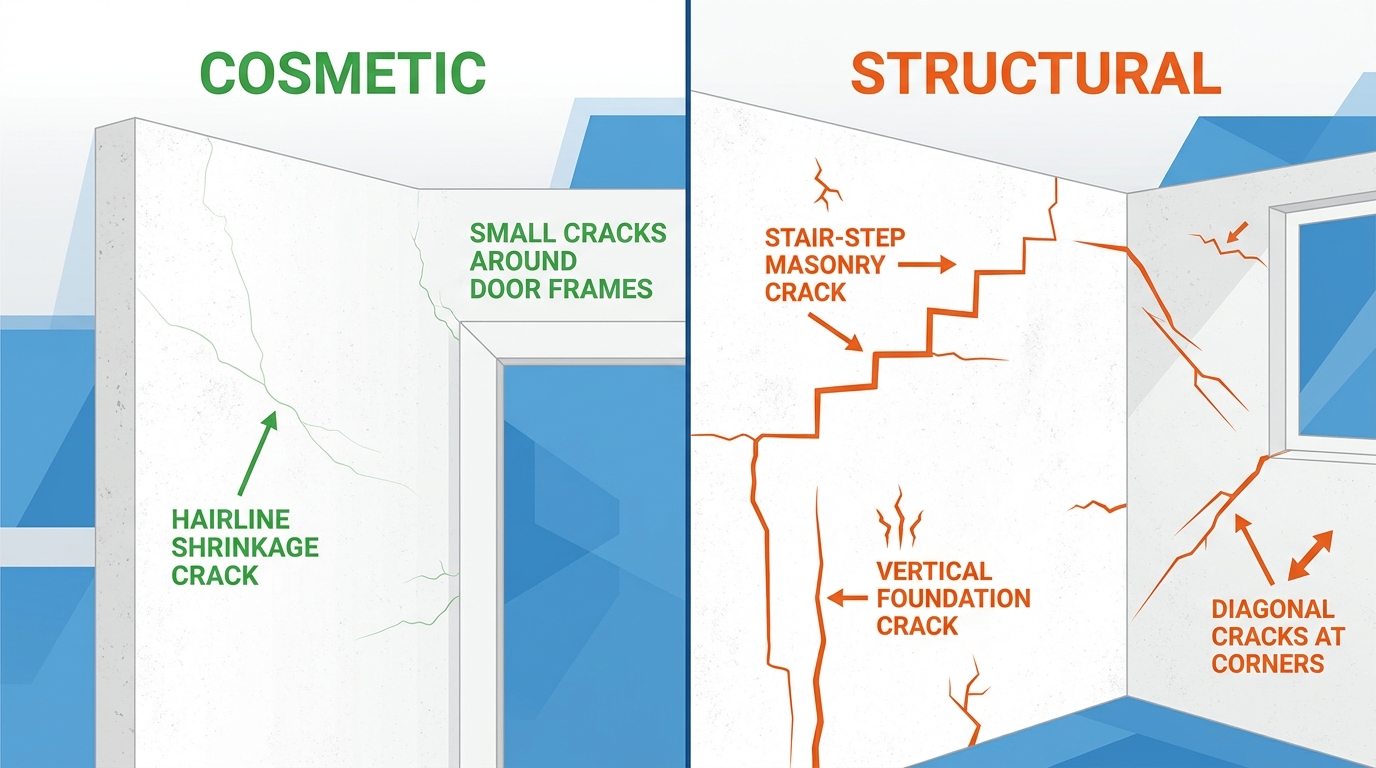
Side-by-side comparison of normal vs settlement cracks in foundation walls
According to the National Foundation Repair Association’s industry guidelines, systematic crack patterns are a key indicator of differential settlement. While settlement cracks in new construction do not automatically mean the foundation is failing, they warrant professional assessment to prevent progressive damage.
These patterned cracks are among the most telling signs of foundation settlement in new construction, and early recognition allows for more straightforward remediation.
If you observe cracks that are widening, aligned in a stair-step pattern, or exceeding 1/8 inch, we recommend consulting a structural engineer. Consult a structural engineer or the manufacturer’s engineering team for project-specific design and installation guidance. Taking early action preserves the integrity of your new home.
Beyond cracks, other signs of foundation movement include sticking doors, uneven floors, and exterior brick separation, which we’ll address next.
When to Call a Professional for a Foundation Inspection
Now that you know what to look for, understanding the right time to bring in an expert can prevent a manageable issue from escalating into a structural crisis. Recognizing the early signs of foundation settlement in new construction is particularly critical, as these homes are still adjusting to their environment and even minor movement warrants immediate attention from a qualified professional.
Key indicators that justify an inspection include interior or exterior cracks wider than 1/4 inch, doors and windows that suddenly stick or refuse to close properly, visible gaps around window frames or exterior trim, and sloping or noticeably uneven floors. Separation at the roofline or where walls meet the ceiling also signals differential movement. In a home less than five years old, any one of these signs of foundation settlement in newly built homes should be evaluated, as the underlying soils may still be consolidating and the foundation has not yet reached equilibrium.
When you schedule an inspection, the professional who arrives will typically be a foundation repair contractor. These specialists can assess the visible damage and recommend appropriate solutions. However, if the repair plan involves helical piles, building codes and manufacturer specifications require a distinct process. According to Helical Technology, while a contractor can perform the initial assessment, a licensed structural engineer must design the helical-pile system to ensure compliance with ICC-ES AC358 acceptance criteria and local building codes. This is not a casual suggestion but a standard practice to verify bearing capacity and structural integrity. Our team provides comprehensive engineering support, including ICC-ES documentation, but the on-site engineer of record retains responsibility for the final, sealed design.
Finding a qualified professional is straightforward when you know what to look for. We recommend working with contractors who are ICC and ISO certified and carry proper liability insurance. A manufacturer that offers advanced earth anchoring systems and a network of structural engineers can also provide reliable guidance during this process. For a directory of vetted inspection professionals, visit the National Foundation Repair Association. Ignoring early settlement indicators often leads to far more invasive and costly structural repairs, making a timely, professional inspection the most cost-effective action you can take. Consult a structural engineer or the manufacturer’s engineering team for project-specific design and installation guidance.